CS2 Skin Stickers: The Complete Guide
CS2 Skin Stickers: The Complete Guide
A player comparing weapon finishes before a match encounters cs2 skin stickers: collectible cosmetic decals that personalize a weapon's appearance without improving its performance. For that player, a store advertising skin bundles from €1 is a starting point for browsing, but choosing a sticker means deciding between a separate item to apply and a skin already decorated.
Those purchases serve different needs. Someone browsing AivonStore's CS2 skin bundles might want a base skin for a new design, while another shopper might prefer an existing sticker combination. The important distinction is ownership: an unapplied sticker is a separate inventory item; an applied sticker becomes part of the weapon's appearance and cannot simply be detached for reuse.
What are cs2 skin stickers?
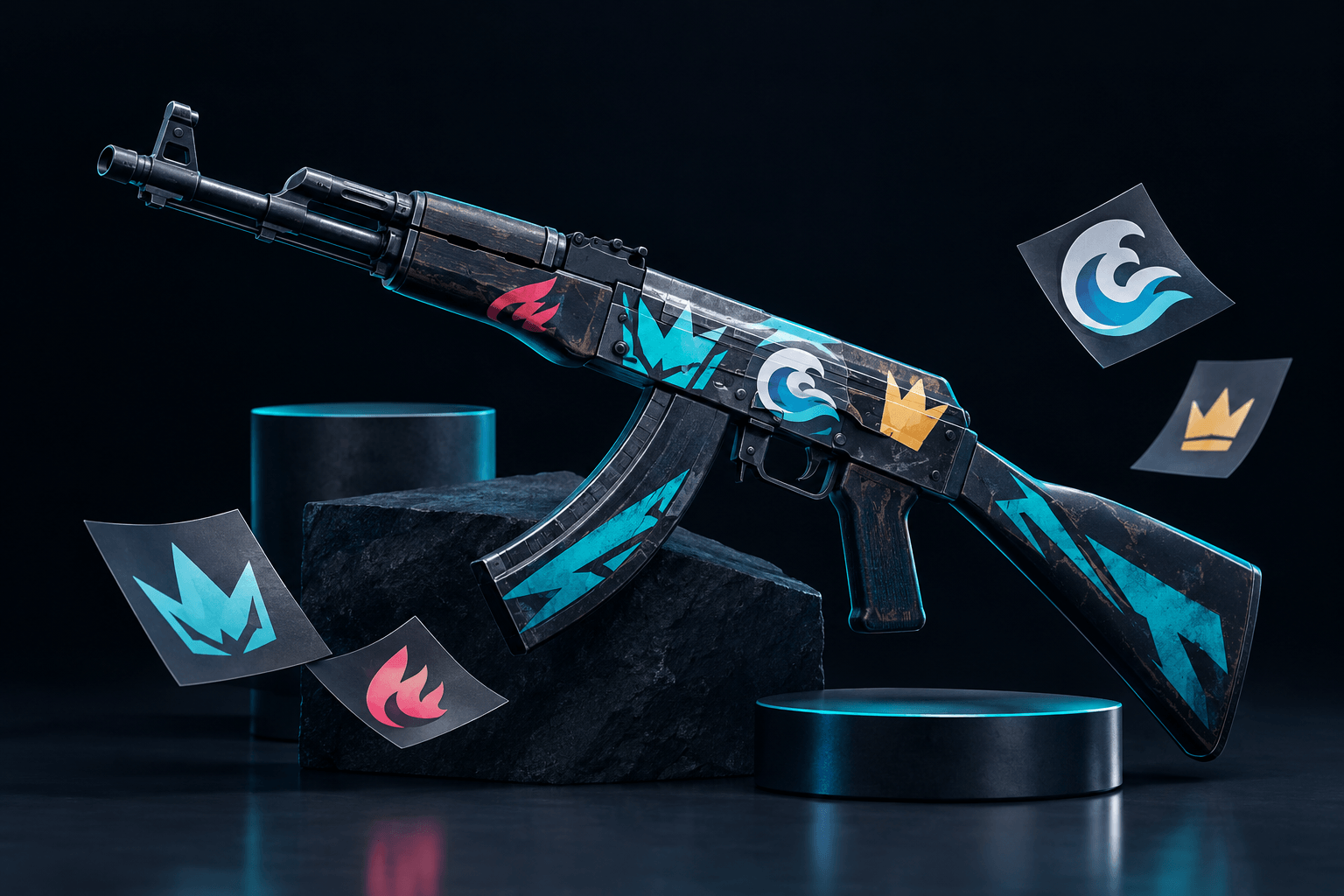
Stickers are cosmetic items that players can apply to supported weapon skins in Counter-Strike 2. Designs include illustrations, symbols, team branding, player signatures, and other artwork. Their appeal comes from how that artwork looks on a particular weapon, not from any change to damage, accuracy, or other gameplay characteristics.
A useful starting point is separating the underlying skin from its decoration. The skin supplies the weapon's finish, including its colors and pattern. Stickers add another visual layer. An attractive sticker can complement that finish, obscure part of it, or create an intentional contrast.
Unapplied, applied, and crafted
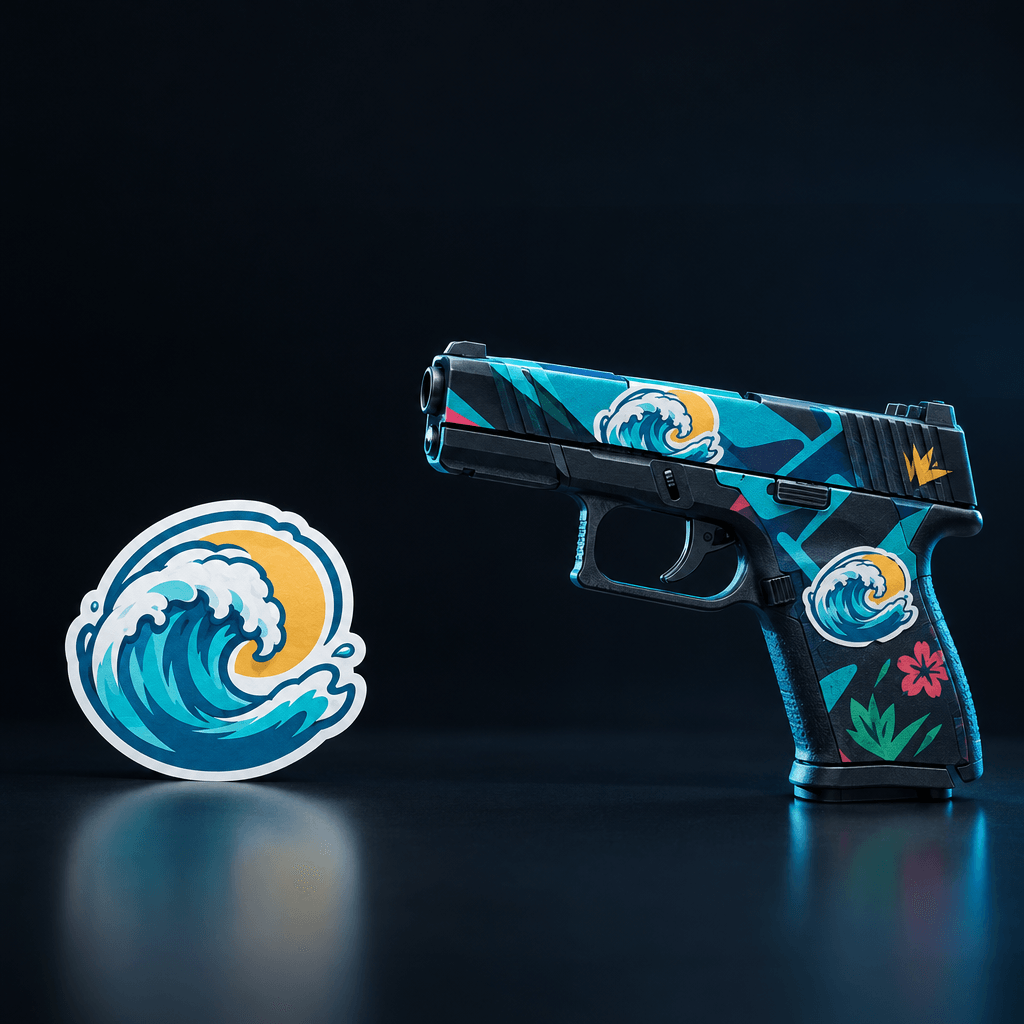
An unapplied sticker remains a separate item that can be selected for application. Once applied, it isn't a spare accessory sitting alongside the weapon. Buying a stickered skin therefore means buying that decorated weapon, rather than receiving the weapon plus separately reusable stickers.
A “craft” is the community term for a weapon decorated with a chosen sticker arrangement. The term describes customization, not an official guarantee of quality, rarity, or resale demand. A simple design can be just as satisfying to its owner as an elaborate combination.
For a first purchase, the base weapon should still make sense without its decoration. The guide to choosing beginner CS2 skins helps narrow that choice around weapons a player actually uses, rather than building a collection around an accessory alone.
Can You Remove Stickers from CS2 Skins?
Yes. Applied stickers can be removed through scraping, but removal destroys the applied sticker rather than returning it to the inventory. It cannot then be transferred to another weapon or sold as an unapplied item.
Scraping changes the sticker's appearance and can eventually remove it. It doesn't provide a reversible editing history, and it doesn't change the underlying skin's float value. Someone considering a partially scraped look should therefore treat each confirmed action as a permanent change.
The planned guide, “Can You Remove Stickers from CS2 Skins?”, will expand on removal decisions and the difference between scraping for appearance and removing decoration entirely. Until then, a buyer who dislikes a craft should compare an undecorated alternative before paying for stickers that will be destroyed.
How Much Overpay for CS2 Sticker Crafts?
There is no universal percentage that determines a craft's premium. A sensible comparison starts with the price of an otherwise comparable undecorated skin, then considers what actual buyers appear willing to pay for the applied arrangement.
When valuing cs2 skin stickers on a finished weapon, standalone sticker listings are context, not an invoice to add to the base skin. Application consumes the separate item, and the next buyer may not want that exact combination, position, or scraped appearance.
Relevant factors include the underlying skin, sticker identity, visual condition, arrangement, and evidence from comparable crafts. Asking prices show what sellers want; they don't establish that a buyer has paid that amount. An unusual craft may also have few meaningful comparisons.
The CS2 skin pricing guide explains how to compare equivalent items before assessing customization. The planned “How Much Overpay for CS2 Sticker Crafts?” guide will deepen that analysis. For a personal-use purchase, the premium should remain within the buyer's own decoration budget, even when the seller presents the combination as collectible.
CS2 Sticker Types and Visual Finishes
Sticker design and finish are separate choices. Design is the artwork: a logo, character, signature, or symbol. Finish determines how that artwork responds visually to lighting and viewing angle. Two versions of the same design can produce noticeably different results on a weapon.
Common CS2 sticker types include paper, holo, foil, and glitter. These labels help organize a shortlist, but they aren't quality rankings. A quieter paper design might suit a detailed skin better than a reflective alternative, while a holo effect might be the main attraction on a simpler finish.
| Finish | General visual character | What to compare on the weapon |
|---|---|---|
| Paper | A comparatively flat printed appearance | Artwork clarity, contrast, and background coverage |
| Holo | Color-shifting effects under changing angles and light | Whether the changing colors complement the base finish |
| Foil | A reflective, metallic-looking effect | Highlight strength and visibility against bright areas |
| Glitter | A sparkling visual effect | Whether the texture supports or distracts from the design |
These are broad descriptions, not promises about every sticker bearing a label. Individual artwork, lighting, and the underlying weapon affect the result. Event-related releases can also include other named finishes, so the exact item name matters more than a thumbnail's apparent shine.
A shopper should inspect the intended version rather than assume that every finish of a design looks similar. In particular, a static listing image may hide the effect that makes a reflective sticker appealing, or exaggerate it through a favorable angle.
What Is a Sticker Craft?
A sticker craft is a deliberate combination of a weapon skin and applied stickers. Some crafts repeat a design; others combine different images around a color, team, joke, or visual theme. There is no requirement for an expensive ingredient or a particular level of complexity.
The strongest cs2 skin stickers combinations usually make their visual intention easy to understand. A matching color can tie the weapon together, while a contrasting emblem can become a focal point. Repetition can create consistency, but too much overlapping detail may hide the artwork that attracted the buyer.
Personal appeal and market appeal differ
A craft can be successful for its owner without attracting a resale premium. A player might value a signature because of a favorite competitor, or choose an unusual color pairing for personal reasons. Another buyer may attach no extra value to either decision.
Building and buying also involve different compromises. Building offers control over the ingredients and layout, while buying an existing craft offers the chance to judge the finished result before committing. Neither route guarantees a lower total cost or stronger resale demand.
Decoration should sit inside the wider collection budget rather than silently expanding it. The guide to budgeting a full CS2 loadout helps separate core weapon purchases from optional extras, which is useful when a sticker idea starts competing with a skin the player would use more often.
How to Choose cs2 skin stickers for Your Skins
Start with the weapon and the intended result, rather than sorting stickers by price or popularity. A buyer seeking a clean design needs a different shortlist from someone making a colorful collage. The underlying finish should guide the choice before individual sticker names become the focus.
Match contrast, detail, and theme
Color matching is only part of the decision. A pale sticker may disappear against a light panel, while detailed artwork can become hard to read on a busy skin. A dark outline or clear shape may matter more than an exact color match.
The artwork's background also deserves attention. A design that looks isolated in an inventory thumbnail may cover more of the weapon than expected. Buyers should consider the whole printed shape, including borders and supporting graphics, rather than concentrating only on the central symbol.
- Choose a visual goal: understated, coordinated, contrasting, or deliberately busy.
- Inspect the base: identify artwork or pattern details worth leaving visible.
- Compare the exact finish: avoid treating paper, holo, and other versions as interchangeable.
- Set a decoration budget: keep the underlying skin purchase separate.
- Check the intended arrangement: consider how the stickers work together, not just individually.
A shortlist becomes more useful when each candidate has a clear purpose. If a sticker neither improves the arrangement nor carries personal meaning, leaving part of the weapon undecorated may produce a more satisfying result than adding another item.
Getting Started with Sticker Application and Placement
Application should begin with a clear distinction between previewing a layout and committing it. A preview helps assess the result; confirmation consumes the unapplied sticker. Buyers learning how to apply stickers in CS2 should use the current game's application interface and read its confirmation rather than rely on an older walkthrough.
Before applying cs2 skin stickers, the player should check the selected weapon, exact sticker version, and intended location. Current placement controls should be assessed in the live client, including the positioning and rotation options it offers. Interface details can change, so a saved screenshot isn't a substitute for the actual preview.
Judge the arrangement as a whole
Position affects more than visibility. A sticker can cover important skin artwork, sit awkwardly across a contour, or compete with another design. An arrangement that looks balanced from an inspection angle may appear crowded or partly hidden during ordinary play.
Where an arrangement uses overlapping artwork, the player should inspect which parts remain visible before committing. Planning around the final composition is safer than assuming that an applied sticker can later be freely moved, recovered, or exchanged for another version.
CS2 sticker placement is therefore a visual decision with a permanent ownership consequence. If the preview leaves uncertainty about the result, postponing confirmation preserves the separate sticker. There is no practical reason to rush a cosmetic choice that can be reviewed again.
Scraping shouldn't be treated as a general-purpose correction tool. It changes or removes the decoration rather than restoring the original unapplied item, so an unsuitable position can turn a simple design mistake into an additional purchase.
Buying Unapplied Stickers Versus Finished Crafts
Buying an unapplied sticker makes sense when the buyer already has a suitable weapon and wants control over the design. Buying a finished craft makes sense when the existing arrangement is appealing enough that no major changes are planned. The distinction is about control and the finished result, not an automatic price advantage.
When separate stickers fit the purchase
A separate sticker lets the owner choose where it goes, subject to the current application's supported controls. It also keeps the purchase undecided until application. The drawback is that the final combination still has to be assembled, and its total cost includes both the base weapon and its decoration.
Shoppers should check the complete item name and version carefully. Similar artwork doesn't mean the finish is identical, and a listing image alone may not distinguish every variant clearly enough for a confident purchase.
When an existing craft fits better
A finished craft can be inspected as a complete object. That is useful when the appeal depends on a particular arrangement, but the buyer inherits the existing choices, including placement and any scraping. An attractive thumbnail isn't enough if the actual weapon tells a different story.
Neither route should be selected solely because the seller labels it a bargain. The relevant comparison is the complete purchase against acceptable alternatives, including an undecorated skin or a simpler arrangement. A buyer shouldn't pay extra for decoration that is likely to be removed.
The broader guide to buying CS2 skins safely helps organize listing checks and purchase readiness. Those checks remain important whether the item is a plain weapon, a separate sticker, or a craft with a substantial claimed premium.
What to Check Before Buying a Stickered Skin
The purchase should be evaluated as an exact item rather than a general skin name. Wear, pattern, sticker version, placement, and visible scraping can all change whether a listing matches the buyer's preferences. A stock image can't settle those questions.
When comparing cs2 skin stickers across listings, the buyer should inspect the actual arrangement and separate its appeal from the condition of the weapon underneath. A worn sticker isn't evidence that the base skin has a particular float, and a clean-looking sticker doesn't establish the skin's condition either.
- Underlying weapon: confirm the exact skin and any version-specific characteristics relevant to the purchase.
- Base finish: inspect visible wear and pattern rather than relying only on a condition label.
- Sticker identity: match the design and finish to the listing description.
- Sticker condition: look for scraping, missing artwork, and changes that affect readability.
- Arrangement: check position, overlap, and visibility from useful viewing angles.
- Total cost: review the final amount and any applicable charges before committing.
- Premium: compare the seller's ask with acceptable alternatives, not just standalone sticker prices.
The guide to checking a skin's float expands the base-condition check. Float and sticker appearance should remain separate parts of the evaluation, especially when attractive decoration draws attention away from wear the buyer would otherwise dislike.
For cross-site comparisons, the explanation of why skin prices differ provides additional context. A cheaper headline listing isn't necessarily an equivalent purchase when the exact item, decoration, or final payable amount differs.
How to Evaluate CS2 Sticker Bundles
A bundle should be assessed by its usefulness to the intended design, not just by its name or apparent quantity. A selection can be appealing as a collection yet unsuitable for a particular weapon. Buyers should establish what they want to build before judging whether a grouped purchase helps.
For cs2 skin stickers, the essential bundle question is whether the listing offers separate sticker items, decorated weapons, or something else. The product description should make that distinction clear. A category heading or promotional image shouldn't be treated as confirmation of exact contents.
A shopper sees “skin bundles from €1” and considers building a decorated weapon. The €1 starting claim alone doesn't establish a sticker bundle's price or the cost of the finished craft, so the shopper checks the actual products before setting the budget.
Terms such as Starter, Bronze, Silver, and Gold are labels, not substitutes for an itemized comparison. Buyers should confirm the exact products, their versions, and the current total rather than assume a tier contains particular finishes or offers a guaranteed saving.
A useful bundle contains items the buyer actually wants, at terms the buyer understands. Unwanted designs don't become useful simply because they arrive together, and a grouped purchase doesn't establish future resale demand. Any account requirements, delivery conditions, charges, or refund eligibility should be checked in the applicable current policies before payment.
FAQ
Are cs2 skin stickers bought separately from weapon skins?
They can be. Unapplied stickers are separate items, while a stickered weapon already has its decoration attached. A listing should identify which purchase is being offered. Buying the decorated weapon doesn't also provide reusable copies of its applied stickers.
Can a sticker be moved to another weapon after application?
An applied sticker cannot be recovered as an unapplied item and transferred to another weapon. Scraping or removal doesn't return it to the inventory. Someone who wants the same design elsewhere needs a separate unapplied copy for that application.
Does scraping a sticker change the skin's float?
No. Sticker scraping affects the decoration, not the underlying skin's float value. Buyers should inspect both independently: the weapon's wear remains relevant to its appearance, while scraping can change how much of the sticker artwork remains visible.
Is a finished craft always cheaper than making the same design?
No. The comparison depends on the exact weapon, sticker versions, arrangement, and current listings. Existing crafts may be offered below or above the cost of their separate ingredients. Neither an asking price nor an ingredient total guarantees a fair purchase.
What should a buyer do when a craft has no close comparisons?
Start with comparable undecorated skins, then decide how much the decoration is personally worth. Without convincing craft comparisons, a claimed premium deserves caution. Waiting, choosing a simpler design, or buying a different weapon are reasonable alternatives to accepting the seller's valuation.
For cs2 skin stickers, start with “CS2 Skin Prices” and “How to Buy CS2 Skins”.